
- What Sets This Book Apart?
- A Quick Look at the Book’s Structure
- Introduction
- 1. The Habit Zone
- 2. Trigger
- 3. Action
- 4. Variable Reward
- 5. Investment
- 6. What Are You Going to Do with This?
- 7. Case Studies: The Bible App, Fitbod
- 8. Habit Testing and Where to Look for Habit-Forming Opportunities
- Our Verdict
- What We Liked
- What to Keep in Mind
- Who Should Read It
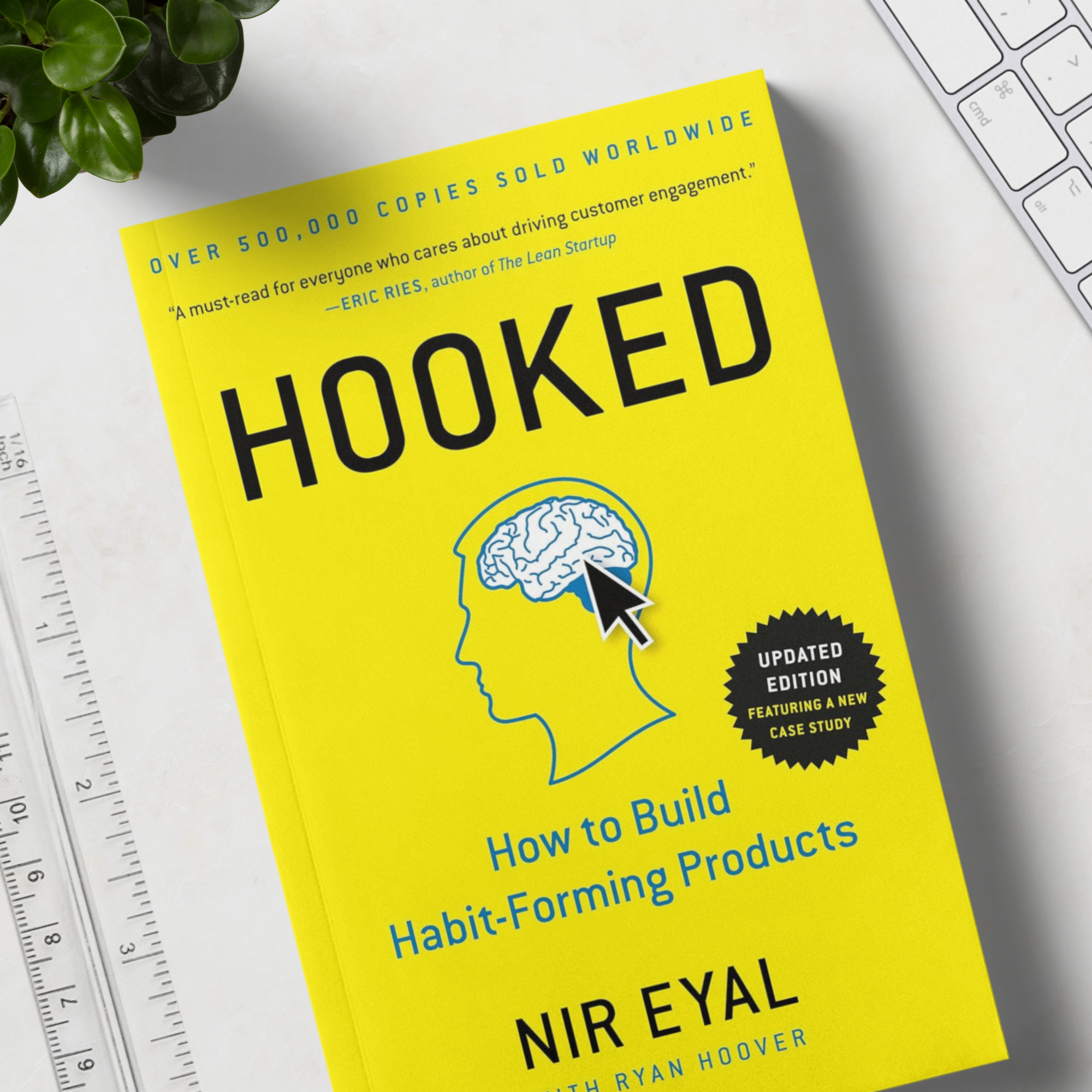
Simply attracting users’ attention isn’t enough—retention is key. Hooked: How to Build Habit-Forming Products by Nir Eyal is a concise yet powerful guide that delves into the mechanics of creating products people will return to again and again. Drawing on psychology, behavioral economics, and real-world successes, Eyal presents an approach that not only explains why certain products hook us, but also how to ethically harness those principles in your own designs.
What Sets This Book Apart?
The true strength of Hooked is its blend of psychological theory and concrete, step-by-step application. Each chapter connects broad concepts to design and product decisions you can implement immediately. Real-life examples—from startups to well-known tech brands—bring the methodology to life, illustrating how easy it can be to incorporate habit-forming elements ethically.
Eyal also devotes time to the moral considerations of designing for habit formation. He acknowledges that while these techniques can exponentially boost user engagement, they can also be misused. Encouraging readers to practice “behavioral design with integrity,” he underscores the responsibility that comes with wielding powerful psychological triggers.
A Quick Look at the Book’s Structure
Eyal’s framework revolves around the “Hook Model,” which consists of four core steps—Trigger, Action, Variable Reward, and Investment. The book is organized around these concepts, providing a logical progression that shows you how to integrate each step into your product strategy. Below is a breakdown of the chapters and key takeaways from each.
Introduction
Eyal sets the stage by explaining the importance of habit-forming products and the difference between products that thrive through repeated engagement and those that fade into obscurity. He emphasizes how well-designed products can subtly integrate themselves into users’ daily routines without resorting to aggressive marketing tactics.
1. The Habit Zone
This chapter introduces the concept of the “Habit Zone,” a space where user needs align with frequent product use. Eyal explores how certain products—often unintentionally—become indispensable to users’ daily lives by addressing a recurring itch or pain point. Designers and entrepreneurs can leverage these insights to intentionally develop experiences that seamlessly fit into established routines.
2. Trigger
Triggers are the cues that prompt users to act, and Eyal distinguishes between external (e.g., notifications, emails) and internal triggers (e.g., emotions, personal motivations). By identifying and aligning with the right triggers, products can be positioned to resonate more deeply with users’ daily behaviors and emotional states.
3. Action
Here, Eyal examines the simplest behavior a user can take in anticipation of a reward, highlighting how motivation, ability, and triggers converge to spark action. Drawing on behavioral economics, he discusses how reducing barriers (e.g., simplifying the interface, minimizing steps) and boosting motivation (through clear benefits or urgency) can lead to higher engagement.
4. Variable Reward
This section delves into the psychology behind variable rewards, the element of surprise or novelty that compels users to keep coming back. Whether it’s new content in a newsfeed or points in a gamified system, unpredictable rewards tap into human curiosity and the desire for stimulation—core elements that drive habit formation.
5. Investment
Eyal’s focus turns to how users invest time, effort, or personal data into a product. This investment increases emotional attachment and makes it harder for users to abandon the experience. Even small actions—like uploading a photo or customizing settings—can lead to a sense of ownership, thereby reinforcing the habit loop.
6. What Are You Going to Do with This?
This chapter provides practical exercises and reflection prompts to help readers map out their own Hook Model. Eyal encourages designers, entrepreneurs, and product managers to identify the triggers, outline the actions, plan the variable rewards, and specify user investments that would drive sustained engagement in their own projects.
7. Case Studies: The Bible App, Fitbod
Eyal examines real-world products through the lens of the Hook Model. The Bible App and Fitbod serve as illustrative examples of how each step—Trigger, Action, Variable Reward, and Investment—plays out in practice. Both case studies underscore how seemingly simple design decisions can significantly boost retention when aligned with users’ needs and motivations.
8. Habit Testing and Where to Look for Habit-Forming Opportunities
Concluding the book, Eyal offers strategies for habit testing. He explains how to run experiments and gather data to confirm whether your product is truly forming habits—or if it needs iteration. Additionally, he discusses where to look for new habit-forming opportunities within emerging markets or underserved user segments.
Our Verdict
For anyone involved in product development—whether you’re an entrepreneur building your first MVP or a seasoned designer refining an established platform—Hooked: How to Build Habit-Forming Products is a valuable guide to understanding (and ethically leveraging) the mechanisms behind user habits. By applying Eyal’s Hook Model, you can create meaningful, user-focused experiences that people naturally incorporate into their daily lives. More than just a how-to book, Hooked challenges readers to design with empathy, ensuring the end result benefits both the user and the organization.
What We Liked
- One memorable framework: the four-step Hook Model is easy to remember and to apply to a real product.
- Short and practical: you can read it in a weekend, and each chapter ends with exercises.
- An ethics check: Eyal gives you a way to ask whether a habit you design actually helps the user.
What to Keep in Mind
- Consumer-app focus: most examples are social, media and fitness apps, so it translates less directly to business software or one-off purchases.
- Powerful techniques cut both ways: the same model drives compulsive use, so read the ethics chapter as seriously as the rest.
Who Should Read It
Product designers, product managers and founders working on apps people use often will get the most out of it. To understand the psychology behind triggers and motivation in more depth, continue with our review of 100 Things Every Designer Needs to Know About People or Laws of UX.

Related articles
21 Oct 2026
Review of 100 Things Every Designer Needs to Know About People by Susan Weinschenk
Our review of Susan Weinschenk's 100 Things Every Designer Needs to Know About People: the psychology behind g... Read more

21 Oct 2026
Microinteractions: The Secret Weapon for Delightful User Experiences
What microinteractions are, why they matter for user experience, and best practices and examples to help you d... Read more
21 Oct 2026
Review of 101 UX Principles - Second Edition: Actionable Solutions for Product Design Success by Will Grant
Our review of 101 UX Principles, Second Edition by Will Grant: what sets it apart, a chapter-by-chapter overvi... Read more